Market Trends
Air Cargo Market Trends: Looking into the Future with the A350F
The air cargo sector is poised for a transformative era of growth and modernization. According to the Airbus 2025 Cargo Global Market Forecast (GMF), the worldwide fleet is projected to expand by a significant 45% to reach 3,420 aircraft by 2044.
Driven by long-term trade growth, global air cargo traffic is expected to rise at a compound annual growth rate (CAGR) of approximately 3.3% over the next two decades. Meeting this expansion will require the delivery of 2,605 new freighters:
● 1,530 to replace aging fleets.
● 1,075 to support growth.
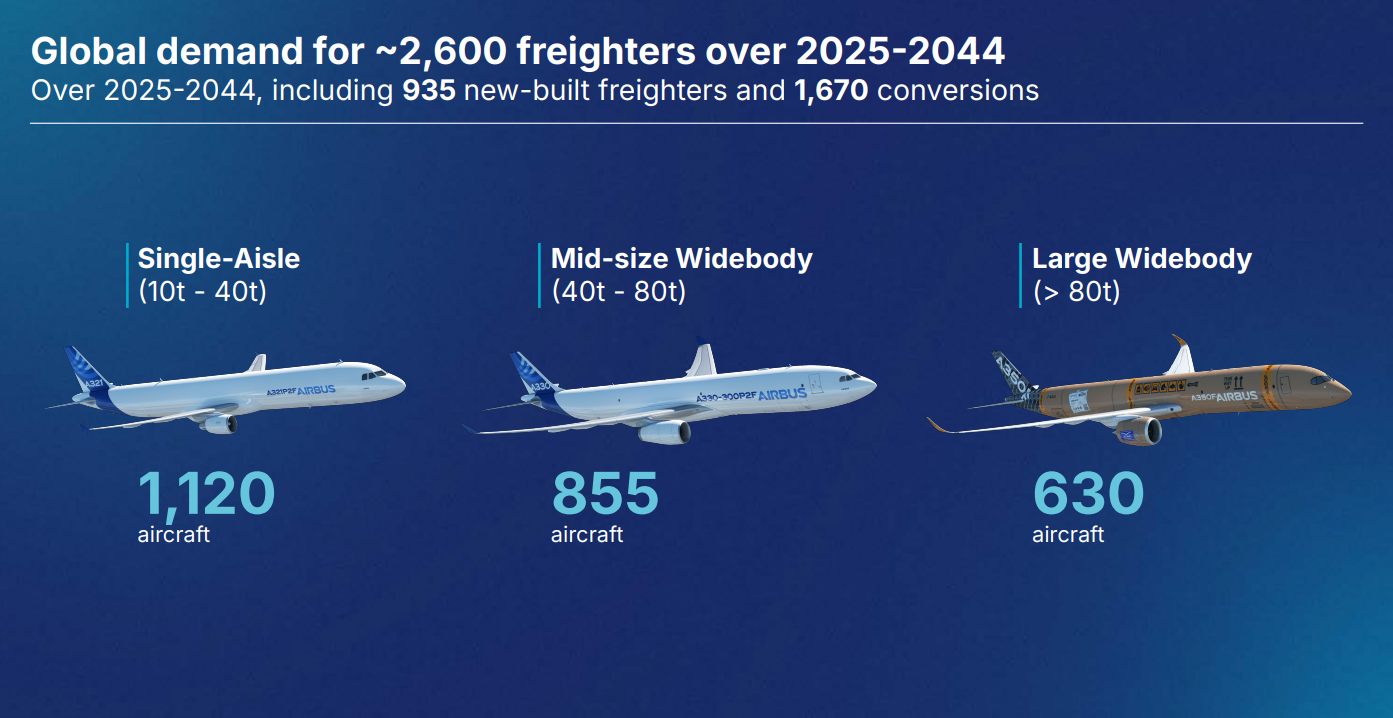
A critical segment of this demand—roughly 25%—focuses on large, highly efficient widebody freighters. The GMF forecasts a specific need for 630 large widebody aircraft (over 80t capacity). This is the market segment where the A350F is positioned. As the next generation of new-build freighters, it is designed to replace retiring aircraft while meeting rigorous new efficiency standards.
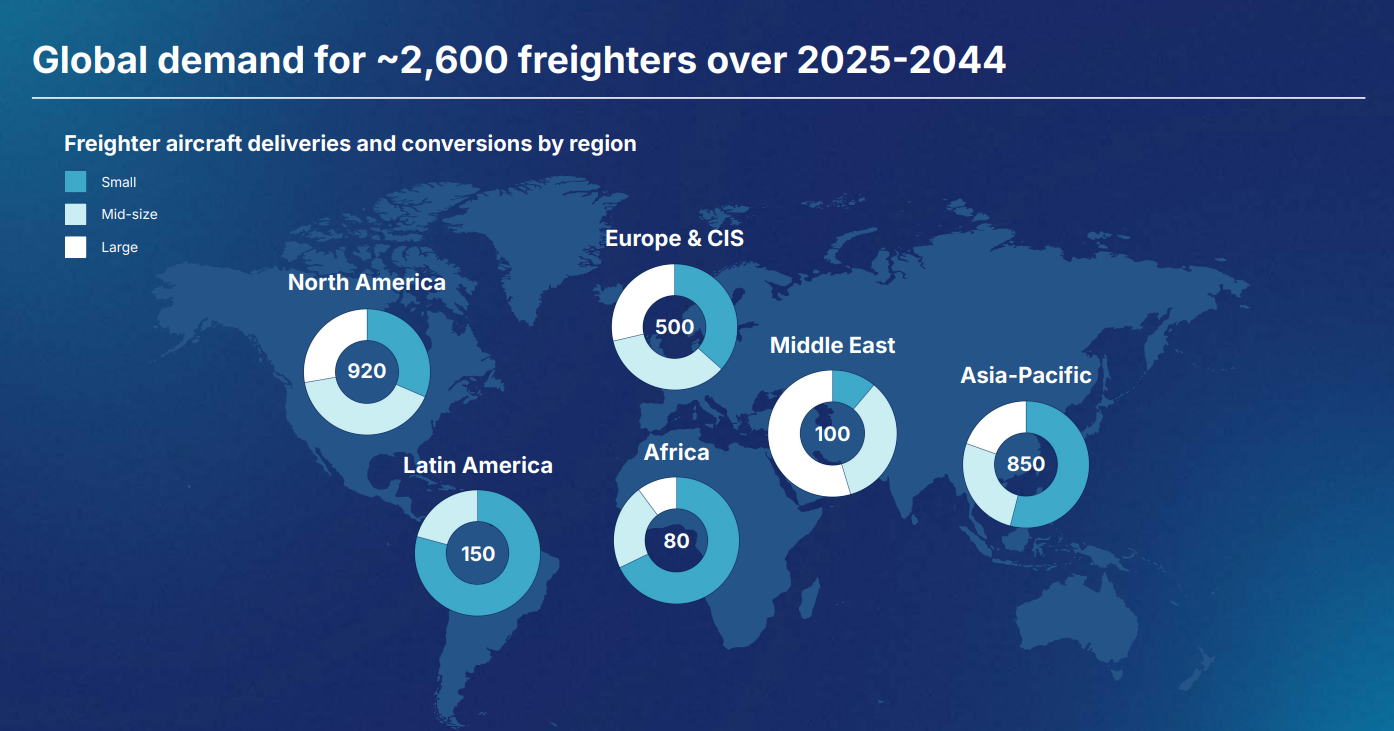
For Latin America, the outlook is particularly dynamic. In the short term, the region has demonstrated robust air cargo traffic, growing at +5.4% in the first eight months of 2025. Looking ahead, the region is projected to need 80 freighter deliveries/conversions over the next 20 years.
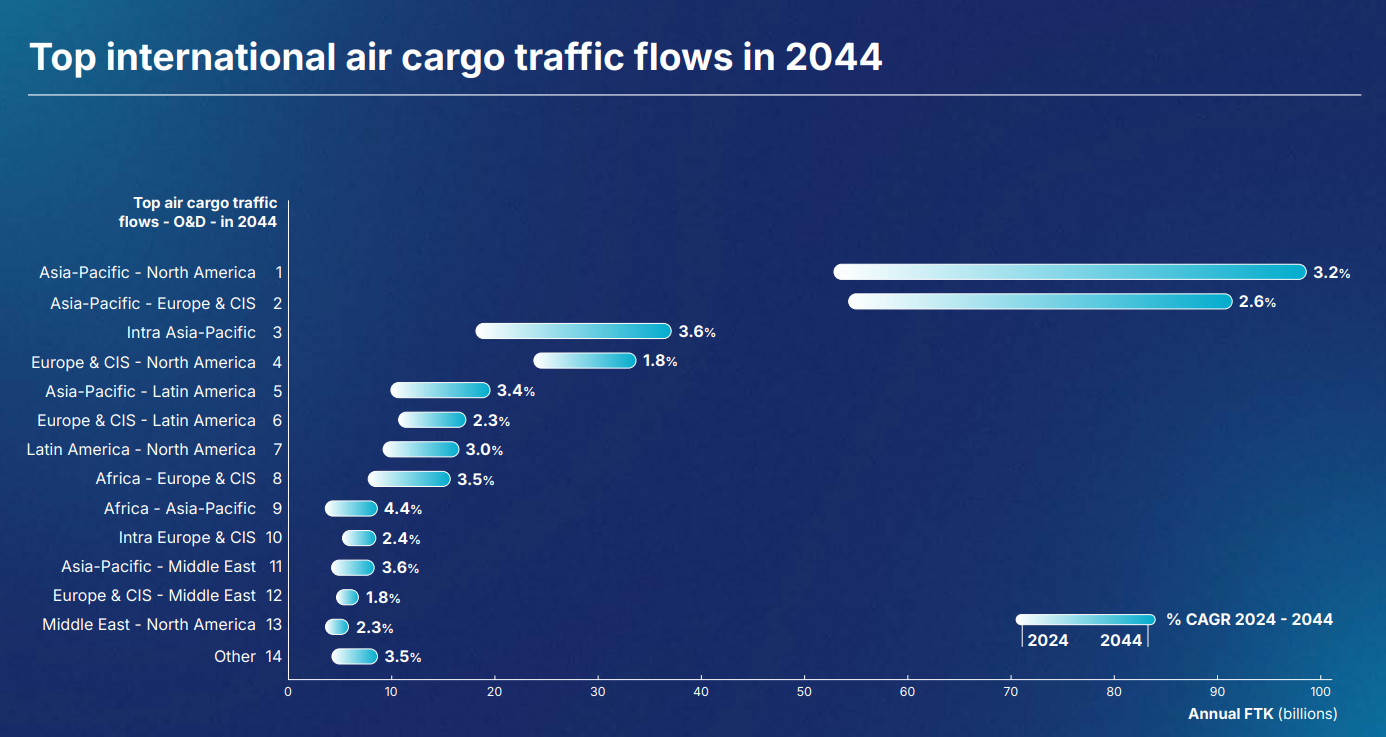
Latin America remains pivotal to global trade, with strong projected growth on key routes connecting the region to Asia-Pacific (3.4% CAGR), North America (3.0% CAGR), and Europe (2.3% CAGR). As these long-haul flows strengthen, the A350F will play a critical role in providing the necessary capacity and range to serve the growing Latin American network.
As these long-haul, high-capacity flows strengthen and older fleets retire, the A350F will play a critical role in providing the capacity and efficiency required across global networks, including those serving the growing Latin American market.
Compared to previous-generation freighters currently in service, the A350F delivers up to 40% lower fuel burn and CO₂ emissions. Additionally, it boasts a maximum structural payload capacity of 111 tonnes and features the largest main-deck cargo door in the industry, enabling quicker turnaround times and easier loading of oversized freight.
The industry’s confidence in the A350F is evident, with 82 firm orders including repeat orders from 13 different customers, validating the A350F as the definitive choice for the future of air cargo.
For more information contact:
Jaime Martinez
Airline Marketing Manager
jaime.martinez-lopez@airbus.com